Inspection and scope you can follow
We map where growth is visible, where moisture likely traveled, and what materials are impacted. You get a clear plan that matches the conditions on-site, not a generic checklist.
Serving Oklahoma City, Oklahoma & surrounding areas
Mon–Fri 8am–6pm · Sat 9am–2pm
If you smell musty odors, see staining, or have had a recent leak, we can inspect, contain, remove, and document the cleanup so you can use the space again with confidence.
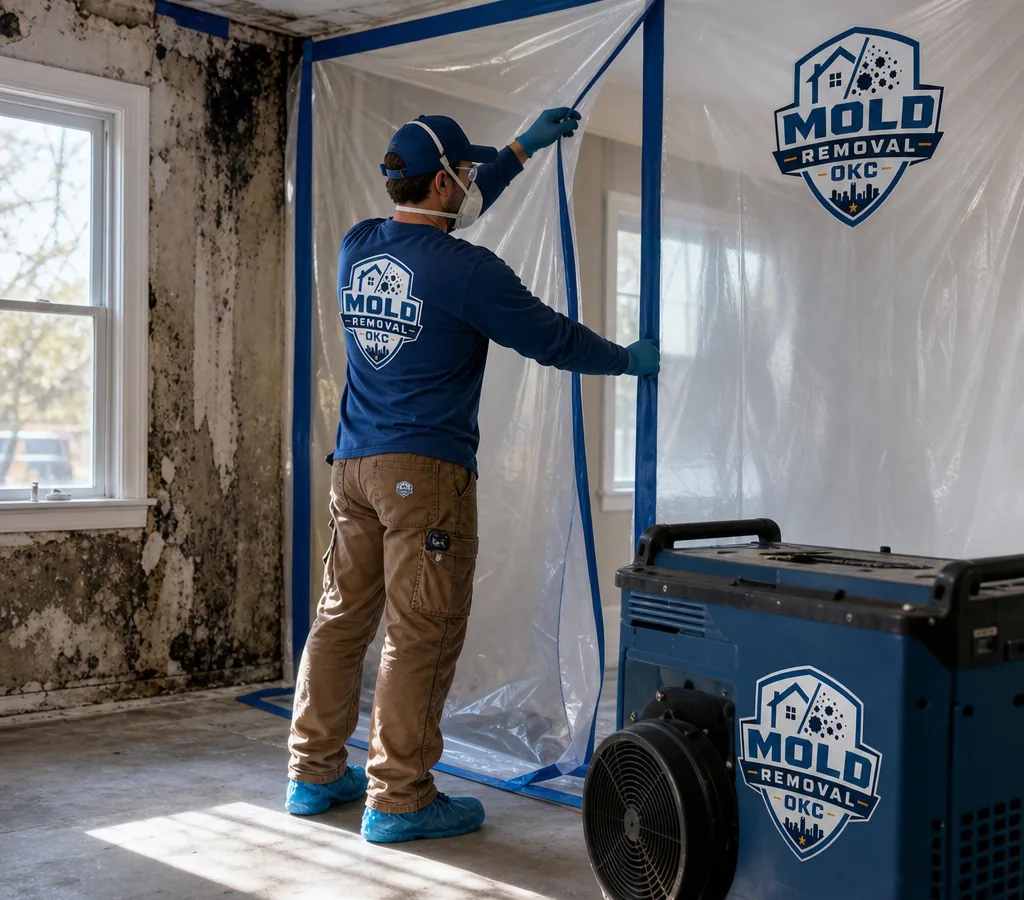
Mold problems rarely start as mold problems. In Oklahoma City, they usually start with moisture: a roof leak after a storm, a plumbing failure behind a wall, a wet crawlspace, or humidity that stays trapped in a bathroom or closet. Mold grows on what it can eat—paper backing on drywall, framing dust, and carpet pad—and once it spreads you need more than surface cleaning.
Oklahoma City mold remediation is a controlled process. The goal is to stop the spread, remove contaminated materials when needed, clean what can be cleaned, dry the structure, and verify the work with clear documentation. Wiping it down without containment can spread spores to clean areas and turn one room into several.
Mold Removal OKC handles mold remediation for homes and businesses across Oklahoma City, OK, including ZIP 73111 and surrounding areas. We identify the moisture source, define affected areas, and provide a written scope before demolition starts.
We map where growth is visible, where moisture likely traveled, and what materials are impacted. You get a clear plan that matches the conditions on-site, not a generic checklist.
We isolate the work area with plastic barriers and use negative air with HEPA filtration when appropriate to reduce cross-contamination.
Heavily affected drywall, insulation, carpet pad, and porous particleboard may need to be removed and bagged to limit spread.
We HEPA vacuum and wet-clean structural surfaces, framing, and contents within the scope using methods appropriate for each material.
We use dehumidification and airflow as needed, then confirm drying with moisture readings before areas are closed back up.
You receive job notes and photos showing containment, removal, cleaning steps, and the condition at completion—useful for property owners, managers, and insurance files.
Most calls involve places where moisture lingers out of sight. In older neighborhoods with mixed housing stock like Mesta Park and Heritage Hills, hidden moisture can travel behind plaster or older wall assemblies after a slow leak. In slab-on-grade construction, water may move along base plates and flooring edges after a supply-line break or overflow.
Apartments and multi-unit properties near the urban core and Midtown can have shared-wall and shared-plumbing challenges. When a leak occurs in one unit, mold can develop on the adjacent side if drying is delayed or incomplete.
Basements are less common in much of the metro, but crawlspaces and attics can be trouble spots. Past water damage, recurring condensation, or a persistent odor warrants an evaluation. Projects go more smoothly when the moisture source is corrected early, keeping cleanup limited to what is actually affected.
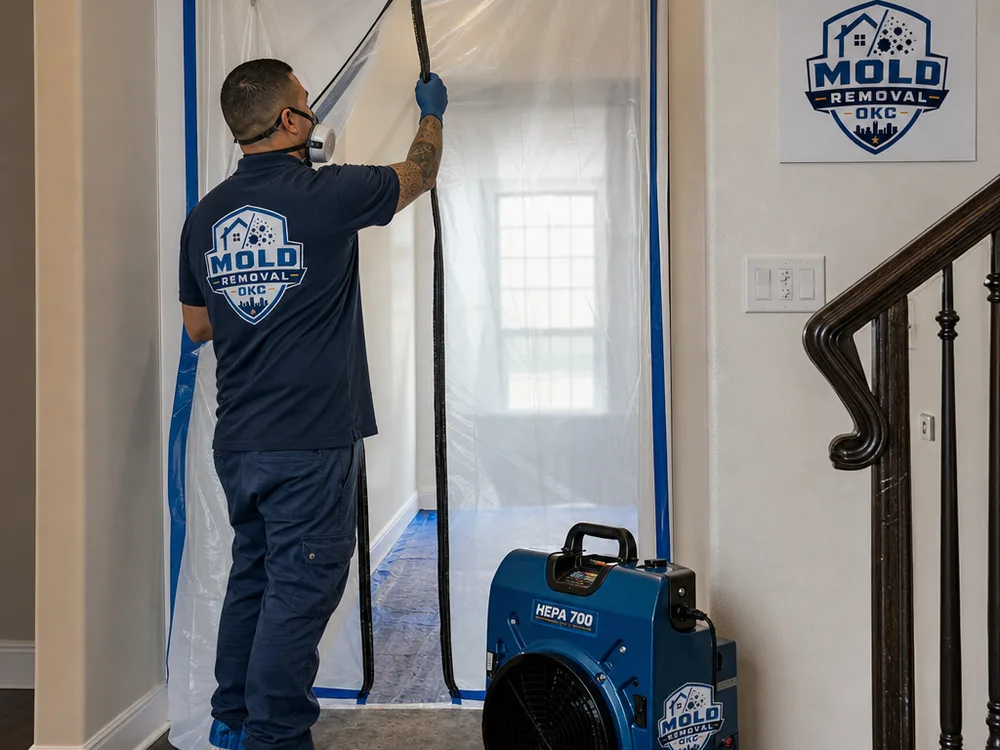
Each stage controls spread, addresses damaged materials, and confirms the area is ready for repair or reuse.
Book Your Free InspectionWe look at visible growth, staining, and likely moisture sources, including plumbing, roofing, HVAC condensation, and past flooding. For concealed areas, we discuss non-destructive ways to narrow the scope before opening walls.
We set containment boundaries, protect floors and adjacent rooms, and establish air control when needed. This helps keep a localized cleanup from becoming a whole-house issue.
We remove contaminated porous materials that cannot be reliably cleaned, then seal and move debris out while keeping spores contained.
We HEPA vacuum and clean remaining surfaces. Products and methods depend on the material, contamination level, and whether the surface will be rebuilt or left exposed.
We dry the area to appropriate moisture levels, confirm readings, and provide photos and notes. If rebuilding is needed, we leave the area ready for the next trade.
Most Oklahoma City mold remediation projects typically range from about $1,500 to $6,500, with small, contained cleanups often landing near $1,500 to $3,000 and larger multi-room or heavy-demolition jobs running $6,500 to $15,000+.
Your price depends on how far contamination spread, which materials are affected, access in crawlspaces or attics, the containment required, and whether drying equipment is needed. Exact cost is confirmed after an on-site inspection and written scope.
“We had a musty smell that wouldn't go away after a bathroom leak. The crew set up containment, removed the damaged drywall, and kept the rest of the house clean. The photos and notes at the end made it easy to understand what was done.”
“Property manager perspective: communication was the big win. They explained the containment plan, worked around tenants, and documented everything so we could close out the file without guessing what happened behind the walls.”
If it is truly small and on a non-porous surface, careful cleaning can help. Once mold is in drywall, insulation, or carpet pad—or a persistent odor remains—remediation is usually safer. Disturbing growth without containment can spread spores, while leaving the moisture source unresolved allows it to return.
Most single-area projects take 1 to 3 days once the scope is defined. Larger multi-room jobs can take several days to a week depending on demolition, access, and drying time. We provide a realistic timeline after assessing the affected materials and moisture levels.
Sometimes. Porous materials that cannot be reliably cleaned may need removal so framing can be cleaned and the cavity fully dried. We remove only what conditions require and document what comes out to simplify rebuilding.
Air or surface sampling can be useful, but it is not required for every job and does not replace a visual and moisture-based assessment. If third-party sampling is needed for a transaction, medical concern, or formal clearance process, the remediation work can be coordinated with that plan.
Yes. We handle offices, retail spaces, and multi-unit rentals where timing, occupant safety, and documentation matter. Containment is especially important in shared-wall buildings so an affected unit can be isolated while adjacent areas remain usable.
Keep the area undisturbed and avoid running fans that could move spores into other rooms. If an active leak exists, stop the source when safe and move valuables away. We will confirm the scope and explain containment before removal begins.
Describe what you're seeing and where it's happening, and we'll schedule an inspection to confirm the scope, the containment approach, and next steps for your Oklahoma City property.